Understanding Artificial Intelligence: A Complete Beginner’s Guide
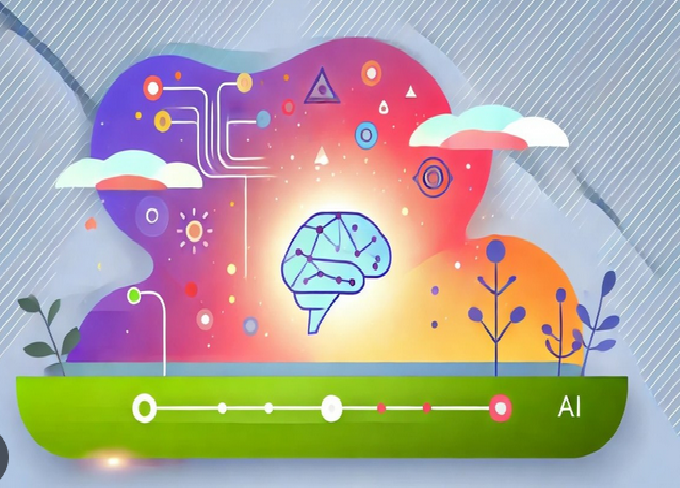
Artificial Intelligence (AI) has become one of the most transformative technologies of the 21st century. From smartphones that recognize our faces to chatbots that answer questions in real-time, AI has become a part of our everyday lives. Yet, many people still find the concept of AI confusing or intimidating. What exactly is AI? How does it work? And why is it considered so powerful?
This guide aims to provide a complete and beginner-friendly explanation of Artificial Intelligence—its history, types, key technologies, applications, and what the future may hold. Whether you are a student, a business professional, or simply curious, this article will help you understand AI from the ground up.
What Is Artificial Intelligence?
Artificial Intelligence refers to the ability of machines or computer systems to perform tasks that typically require human intelligence. These tasks include problem-solving, decision-making, learning, speech recognition, and visual perception.
In simple terms, AI is about creating systems that can “think” and “act” intelligently. The goal is not to replicate the human brain exactly, but to simulate its ability to learn and adapt in various situations.
AI systems use data, algorithms, and computational power to identify patterns, make predictions, and improve their performance over time. For example, when you type on your phone and it predicts the next word, that’s AI in action.
The History and Evolution of Artificial Intelligence
Early Beginnings
The concept of intelligent machines has existed for centuries. Ancient myths and stories often featured artificial beings or mechanical creations that could think or move like humans. However, the scientific foundation of AI began in the 20th century.
In 1950, British mathematician Alan Turing introduced the idea of a “thinking machine” in his paper Computing Machinery and Intelligence. He proposed the Turing Test, a method to determine whether a machine could exhibit human-like intelligence.
The Birth of AI as a Field (1956)
The official birth of Artificial Intelligence as a scientific field took place in 1956 at the Dartmouth Conference, organized by John McCarthy, Marvin Minsky, Nathaniel Rochester, and Claude Shannon. They believed that machines could eventually simulate human learning and reasoning.
AI Winters and Resurgence
AI went through periods of excitement and disappointment known as AI winters—times when funding and research interest declined due to slow progress. However, the field revived in the late 1990s and 2000s with advances in computing power, data availability, and algorithmic breakthroughs.
Modern AI Era
Today’s AI is driven by machine learning and deep learning, which allow computers to learn from vast amounts of data. Technologies like neural networks, big data, and cloud computing have made it possible for AI to achieve what was once considered science fiction.
Key Components of Artificial Intelligence
To understand how AI works, it’s important to explore its fundamental components and techniques:
1. Machine Learning (ML)
Machine Learning is the backbone of modern AI. It enables computers to learn from data without being explicitly programmed. The system identifies patterns and improves its performance over time.
Types of Machine Learning:
-
Supervised Learning: The system is trained on labeled data (input-output pairs).
-
Unsupervised Learning: The system finds patterns in unlabeled data.
-
Reinforcement Learning: The system learns by trial and error using rewards and punishments.
2. Deep Learning
Deep Learning is a subset of machine learning that uses neural networks with many layers (hence “deep”) to process data. It is especially powerful for image recognition, speech processing, and natural language understanding.
3. Natural Language Processing (NLP)
NLP allows computers to understand, interpret, and respond to human language. It’s the technology behind voice assistants like Siri, Google Assistant, and ChatGPT. NLP combines linguistics, computer science, and machine learning.
4. Computer Vision
Computer Vision gives machines the ability to “see” and interpret visual information from the world, such as photos, videos, or real-time camera feeds. It’s used in facial recognition, medical imaging, and self-driving cars.
5. Robotics
AI-powered robotics integrates intelligence into machines that can perform physical tasks. Robots are used in manufacturing, surgery, and even space exploration.
6. Expert Systems
These are AI programs designed to mimic the decision-making abilities of human experts in specific fields like finance, law, or medicine.
Different Types of Artificial Intelligence
AI can be categorized based on its capabilities and functionality.
1. Based on Capability
-
Narrow AI (Weak AI):
Designed for a specific task, such as facial recognition or online recommendations. Most current AI systems fall under this category. -
General AI (Strong AI):
A hypothetical system that can perform any intellectual task that a human can. This form of AI is still in the research phase. -
Super AI:
A level of intelligence that surpasses human capability. It could potentially think, reason, and make decisions better than humans. It remains a theoretical concept.
2. Based on Functionality
-
Reactive Machines:
The simplest form of AI that reacts to specific inputs. Example: IBM’s Deep Blue, which defeated chess champion Garry Kasparov. -
Limited Memory:
These AI systems learn from past experiences to make better decisions. Example: self-driving cars. -
Theory of Mind:
An advanced AI type that can understand human emotions, beliefs, and intentions. Still under development. -
Self-Aware AI:
A futuristic AI that possesses self-consciousness and awareness. Currently, it only exists in science fiction.
How Artificial Intelligence Works
AI works through a combination of data, algorithms, and computing power.
-
Data Collection: AI systems collect massive amounts of data—text, images, audio, video, or numbers.
-
Data Processing: The data is cleaned and organized for analysis.
-
Algorithm Training: Machine learning models are trained using this data.
-
Pattern Recognition: The system identifies relationships and patterns.
-
Decision Making: Based on recognized patterns, the AI makes predictions or decisions.
-
Continuous Learning: The system improves as it processes more data.
For example, an AI-powered email filter learns to recognize spam messages by analyzing thousands of examples and adjusting its algorithm accordingly.
Applications of Artificial Intelligence
AI has countless applications across industries. Let’s look at some major examples:
1. Healthcare
AI helps diagnose diseases, analyze medical images, and recommend treatments. Predictive analytics in AI can forecast patient outcomes and detect early signs of illness.
2. Education
AI-driven learning platforms personalize education by adapting to individual student needs. Virtual tutors and chatbots provide assistance 24/7.
3. Finance
Banks and financial institutions use AI for fraud detection, credit scoring, and algorithmic trading. Chatbots help customers manage their accounts efficiently.
4. Transportation
Self-driving cars and AI-powered traffic management systems are transforming transportation. AI helps reduce accidents, optimize routes, and enhance logistics.
5. Business and Marketing
AI automates customer support, analyzes consumer behavior, and creates personalized marketing campaigns. Tools like predictive analytics improve decision-making.
6. Entertainment
Streaming platforms like Netflix and Spotify use AI to recommend movies and music. Game developers use AI to create realistic opponents and environments.
7. Agriculture
AI-driven drones and sensors monitor crops, predict yields, and detect diseases early, improving productivity and sustainability.
8. Cybersecurity
AI identifies potential security breaches and responds to threats faster than human teams. Machine learning algorithms detect unusual activity and protect sensitive data.
Benefits of Artificial Intelligence
AI brings numerous advantages that make it a game-changer across multiple fields:
-
Efficiency and Automation:
AI automates repetitive tasks, saving time and reducing human error. -
24/7 Availability:
Machines don’t need rest, allowing round-the-clock service. -
Improved Accuracy:
AI can process large datasets quickly and make highly accurate predictions. -
Cost Reduction:
Automation reduces operational costs and increases productivity. -
Enhanced Decision-Making:
AI provides insights based on data, leading to better business and policy decisions. -
Innovation and Discovery:
AI contributes to scientific breakthroughs in medicine, space exploration, and technology.
Challenges and Limitations of AI
Despite its potential, AI is not without challenges:
-
Data Dependency:
AI needs massive amounts of quality data to function effectively. -
Bias in Algorithms:
If data is biased, AI can produce unfair or discriminatory outcomes. -
Job Displacement:
Automation may replace some human jobs, leading to unemployment concerns. -
High Development Costs:
Building AI systems can be expensive due to hardware, software, and expertise requirements. -
Ethical Concerns:
Issues like privacy, surveillance, and misuse of AI raise ethical questions. -
Lack of Human Understanding:
AI lacks empathy, creativity, and moral judgment, which are essential in certain decisions.
The Future of Artificial Intelligence
The future of AI is both exciting and uncertain. Here are some emerging trends:
1. AI in Everyday Life
AI will continue to integrate into daily activities—from personalized virtual assistants to intelligent home systems that anticipate our needs.
2. Explainable AI (XAI)
Future AI systems will be more transparent, allowing humans to understand how decisions are made—essential for building trust and accountability.
3. Human-AI Collaboration
Instead of replacing humans, AI will enhance human capabilities, leading to a new era of cooperation between people and machines.
4. AI in Ethics and Governance
As AI grows more powerful, governments and organizations will develop stricter regulations to ensure ethical and responsible use.
5. AI and Creativity
AI-generated art, music, and literature are expanding. Future systems may collaborate creatively with humans in ways we can’t yet imagine.
How to Start Learning Artificial Intelligence
For beginners interested in AI, here’s a simple roadmap:
-
Learn the Basics:
Start with fundamental concepts like algorithms, statistics, and programming (Python is highly recommended). -
Understand Machine Learning:
Study supervised and unsupervised learning, data preprocessing, and model evaluation. -
Explore Deep Learning:
Learn about neural networks, TensorFlow, and PyTorch. -
Practice on Projects:
Work on small AI projects, such as image recognition or chatbot development. -
Stay Updated:
AI evolves quickly—follow news, attend webinars, and engage with the AI community.
Conclusion: Embracing the Intelligent Future
Artificial Intelligence is reshaping the world as we know it. It enhances how we work, communicate, learn, and make decisions. For beginners, understanding AI is not just about technology—it’s about understanding the future of human civilization.
While challenges like ethics, bias, and unemployment remain real concerns, the potential benefits are enormous. As AI continues to evolve, humans must ensure that it is used responsibly, creatively, and inclusively.







Post Comment