Front-End vs Back-End Development: What’s the Difference?
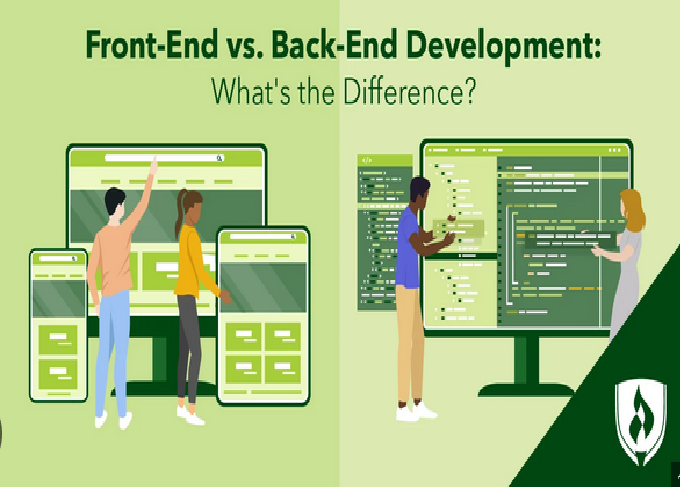
In the world of web development, two main components work together to bring websites and applications to life — Front-End and Back-End development. While both are crucial for creating functional, dynamic, and user-friendly websites, they serve very different purposes. Understanding the difference between the two helps developers, business owners, and even beginners know how websites truly operate from inside and out.
This detailed guide will explain what front-end and back-end development mean, their roles, technologies, tools, frameworks, responsibilities, and how they work together to create a complete digital experience.
1. Introduction to Web Development
Before diving into front-end and back-end development, it’s essential to understand what web development actually is.
Web development refers to the process of creating websites and web applications that run on the internet. It involves coding, designing, and maintaining websites to ensure they function correctly across all devices and browsers.
Web development is generally divided into three main parts:
-
Front-End Development – focuses on what users see and interact with.
-
Back-End Development – handles what happens behind the scenes (server, database, and logic).
-
Full-Stack Development – a combination of both front-end and back-end development.
Together, these aspects ensure that a website looks great, runs smoothly, and performs efficiently.
2. What Is Front-End Development?
Front-end development, also known as client-side development, is the process of creating the visual part of a website — the part users see and interact with directly.
Everything you click, scroll, read, or watch on a website is part of the front-end.
The goal of front-end development is to provide a seamless, responsive, and engaging user experience.
Key Responsibilities of Front-End Developers
-
Designing and implementing the structure and layout of web pages.
-
Ensuring websites are mobile-friendly and responsive across devices.
-
Enhancing user experience with interactive elements.
-
Optimizing performance and load times.
-
Maintaining cross-browser compatibility.
3. Core Technologies in Front-End Development
Front-end developers rely on three primary technologies:
1. HTML (HyperText Markup Language)
HTML is the backbone of every website. It defines the structure and content of web pages using tags. For example, headings, paragraphs, images, and links are all created using HTML.
2. CSS (Cascading Style Sheets)
CSS controls the presentation of the website — colors, fonts, layout, spacing, and animations. It allows developers to style HTML elements and make them visually appealing.
3. JavaScript
JavaScript adds interactivity and dynamic behavior to websites. It enables things like dropdown menus, sliders, pop-ups, and form validations.
4. Popular Front-End Frameworks and Libraries
Modern front-end development has evolved far beyond simple HTML, CSS, and JavaScript. Frameworks and libraries make it faster and easier to build complex user interfaces.
Some of the most popular ones include:
-
React.js – Developed by Facebook, React is a powerful library for building dynamic user interfaces and single-page applications.
-
Angular – A full-fledged front-end framework by Google that provides two-way data binding and modular development.
-
Vue.js – Known for its simplicity and flexibility, Vue is great for beginners and scalable projects.
-
Bootstrap – A CSS framework used for creating responsive, mobile-first web designs quickly.
-
Tailwind CSS – A modern CSS framework offering utility-first styling and customization.
5. Tools Used in Front-End Development
Front-end developers use various tools to improve workflow and productivity, such as:
-
Code Editors: Visual Studio Code, Sublime Text, Atom
-
Version Control: Git and GitHub
-
Package Managers: npm, Yarn
-
Task Runners: Gulp, Webpack
-
Design Tools: Figma, Adobe XD, Sketch
6. What Is Back-End Development?
Back-end development, also known as server-side development, handles everything that happens behind the scenes of a website.
It focuses on databases, servers, and the logic that powers the website.
When a user interacts with the front-end (e.g., submitting a form or logging in), the back-end processes that request, retrieves the necessary data, and sends it back to the front-end for display.
Example:
When you log into Facebook:
-
The front-end collects your username and password.
-
The back-end checks those credentials against the database.
-
If correct, the back-end grants access and sends your profile data to the front-end.
7. Key Responsibilities of Back-End Developers
-
Building and maintaining servers and databases.
-
Writing application logic and APIs.
-
Ensuring data security and authentication.
-
Managing integrations with other systems or services.
-
Optimizing performance and scalability of the server.
8. Core Technologies in Back-End Development
Back-end developers use different programming languages and frameworks to build powerful server-side applications.
1. Programming Languages
-
Python: Popular for its simplicity and frameworks like Django and Flask.
-
PHP: Widely used for server-side scripting, powering platforms like WordPress.
-
Java: Known for its stability and scalability, often used in enterprise-level applications.
-
Ruby: Commonly used with the Ruby on Rails framework for rapid development.
-
Node.js: Allows JavaScript to be used on the server side.
-
C# and .NET: Used for building robust applications on Microsoft’s ecosystem.
2. Databases
Back-end developers work with databases to store and manage data efficiently:
-
SQL Databases: MySQL, PostgreSQL, Microsoft SQL Server
-
NoSQL Databases: MongoDB, Firebase, Cassandra
3. Frameworks
Frameworks speed up development by providing ready-made components and tools:
-
Django (Python)
-
Laravel (PHP)
-
Express.js (Node.js)
-
Spring Boot (Java)
-
Ruby on Rails (Ruby)
9. Tools Used in Back-End Development
Common tools used by back-end developers include:
-
Servers: Apache, Nginx
-
Version Control: Git, GitHub
-
Cloud Services: AWS, Google Cloud, Microsoft Azure
-
API Testing Tools: Postman, Insomnia
-
Containerization: Docker, Kubernetes
10. How Front-End and Back-End Work Together
Front-end and back-end development are like two sides of the same coin — they work together to deliver a complete web experience.
Process Example:
-
A user opens a website and clicks the “Login” button (front-end).
-
The front-end sends a request to the server via an API.
-
The back-end checks the credentials in the database.
-
The back-end sends a response (success or failure).
-
The front-end updates the user interface based on the response.
This continuous communication between the client side and server side ensures a smooth user experience.
11. Differences Between Front-End and Back-End Development
| Aspect | Front-End Development | Back-End Development |
|---|---|---|
| Focus | User interface and user experience | Server, database, and application logic |
| Languages | HTML, CSS, JavaScript | Python, PHP, Java, Node.js |
| Frameworks | React, Angular, Vue.js | Django, Laravel, Express.js |
| Goal | Visual design and interactivity | Data management and functionality |
| Tools | Figma, Bootstrap, GitHub Pages | Docker, Postman, AWS |
| User Interaction | Direct (visible to users) | Indirect (invisible to users) |
| Testing | UI testing, cross-browser testing | Unit testing, API testing |
| Main Challenge | Ensuring responsiveness and usability | Handling performance and scalability |
12. Full-Stack Development: The Bridge Between Both
A Full-Stack Developer is someone skilled in both front-end and back-end development.
They can handle everything from designing user interfaces to building server logic and managing databases.
Popular Full-Stack Technologies
-
MERN Stack: MongoDB, Express.js, React, Node.js
-
MEAN Stack: MongoDB, Express.js, Angular, Node.js
-
LAMP Stack: Linux, Apache, MySQL, PHP
-
Django + React Stack: Django (back-end) and React (front-end)
Full-stack developers are highly valued because they can manage complete projects independently.
13. Career Paths and Skills Required
Front-End Developer Skills
-
Proficiency in HTML, CSS, and JavaScript
-
Understanding of frameworks (React, Angular, Vue)
-
Responsive and mobile-first design
-
Knowledge of version control (Git)
-
UI/UX design understanding
Back-End Developer Skills
-
Knowledge of one or more back-end languages (Python, PHP, Node.js)
-
Experience with databases and APIs
-
Understanding of server management
-
Knowledge of authentication and security
-
Familiarity with cloud and DevOps tools
Full-Stack Developer Skills
-
Combination of both front-end and back-end skills
-
Ability to design, build, and deploy complete web applications
14. Salary Comparison and Job Demand
Both front-end and back-end developers are in high demand globally.
However, salaries vary depending on experience, location, and skill set.
-
Front-End Developers: Often earn slightly less than back-end developers but enjoy creative roles.
-
Back-End Developers: Typically earn higher due to their work with complex logic and databases.
-
Full-Stack Developers: Usually earn the most because of their versatile skill set.
According to industry trends, both roles will continue to grow as digital transformation expands in 2025 and beyond.
15. Which One Should You Choose?
Choosing between front-end and back-end depends on your interests and strengths.
-
Choose Front-End if you love design, creativity, and user experience.
-
Choose Back-End if you enjoy problem-solving, logic, and working with data.
-
Choose Full-Stack if you want a balance of both and enjoy handling complete projects.
No matter which path you choose, both roles offer excellent career opportunities and room for growth.
16. Future of Web Development
The future of front-end and back-end development looks extremely promising.
With advancements like AI integration, progressive web apps, serverless architecture, and web 3.0 technologies, developers will need to adapt and continuously learn.
Emerging Trends
-
Front-End: AI-driven design tools, 3D elements, motion UI, and improved accessibility.
-
Back-End: Cloud computing, microservices, containerization, and real-time data processing.
-
Full-Stack: Cross-platform development and integration of AI APIs.
17. Conclusion
Front-end and back-end development are the two pillars that support the entire structure of web development.
The front-end focuses on what users see, while the back-end ensures that everything works seamlessly behind the scenes.
To create a successful website or application, both must work hand-in-hand — combining creativity, functionality, and technical precision.
Whether you choose to specialize in front-end, back-end, or full-stack, learning these skills opens doors to a rewarding career in technology, where innovation and creativity meet to shape the digital world of tomorrow.






Post Comment