The Future of Artificial Intelligence: How AI Is Transforming Everyday Life
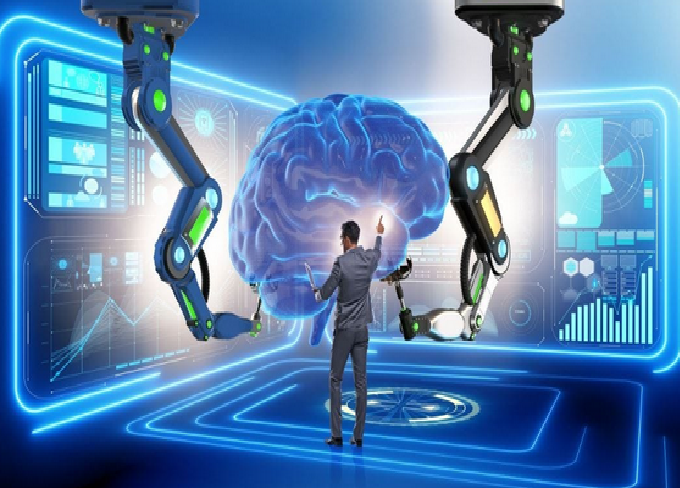
Artificial intelligence (AI) is no longer confined to labs, sci-fi novels, or the tech elite — it’s woven into the fabric of daily life. From how we shop and commute to how we manage our health and learn new skills, AI is quietly reshaping routines, decisions, and possibilities. This article explores the practical ways AI is transforming everyday experiences today, the near-future changes on the horizon, and the social, ethical, and economic forces that will shape how we live with intelligent machines.
Everyday AI you already use (and maybe don’t notice)
Many people interact with AI multiple times a day without giving it a second thought. Voice assistants (think “Hey, play my playlist”), smartphone photo sorting tools that recognize faces and scenes, spam filters in email, recommendation algorithms on streaming platforms, and navigation apps that route around traffic — all rely on AI models trained on patterns from vast datasets. These systems turn raw data into actions: they predict what you want, filter what you don’t, and personalize what you see.
The magic is often in the background. Smart thermostats learn heating patterns and drop costs. Grocery apps suggest items based on past purchases. Fitness trackers infer activity levels and nudge you toward healthier choices. AI is embedded at the seams of convenience, smoothing friction and saving time.
Personalized experiences — better, faster, and more tailored
One of AI’s most visible shifts is personalization at scale. Traditional one-size-fits-all services are replaced by adaptive systems that tune themselves to each user. Education platforms personalize learning paths based on student performance. News aggregators surface stories that match reading habits. Retailers show products that align with nuanced preferences.
The result is a more efficient experience: less time spent searching, more relevant content delivered proactively. But personalization also raises trade-offs — filter bubbles, privacy concerns, and the risk of over-optimization where serendipity and diverse viewpoints get squeezed out. The next wave of personalization will need to balance convenience with exposure to variety and control for users.
Smarter homes and cities: AI at the scale of infrastructure
Smart home devices are the most immediate example of AI augmenting living spaces. Lights, security cameras, and appliances can react automatically to usage patterns and environmental cues. As more devices interconnect, homes become orchestrated ecosystems: your coffee maker starts when your alarm goes off, blinds open to maximize morning light based on calendar schedules, and energy use adjusts to minimize costs.
On a grander scale, cities are adopting AI to optimize traffic flows, manage energy grids, and improve public safety. Traffic-signal timing informed by real-time data reduces congestion. Energy demand forecasting helps utilities balance renewable supply and consumption. Public transit systems use predictive maintenance to reduce breakdowns. The challenge for smart cities is governance: ensuring these systems are transparent, equitable, and resistant to bias or adversarial manipulation.
Health, longevity, and patient-centered care
AI’s influence on healthcare is profound and rapidly expanding. Diagnostic algorithms analyze medical images to detect diseases earlier and with sometimes comparable accuracy to specialists. Tools analyze genomic and clinical data to suggest personalized treatment plans. Wearables and remote-monitoring devices enable continuous health tracking, giving clinicians and patients timely signals instead of sporadic snapshots.
Beyond diagnosis, AI assists in administrative tasks — scheduling, billing, and documentation — freeing clinicians to focus on patient care. Predictive analytics can flag patients at risk of readmission or complications, allowing preventive measures. Still, clinical deployment must be careful: algorithms trained on limited or biased datasets can produce harmful recommendations. The future of AI in health hinges on rigorous validation, explainability, and embedding human oversight.
Work and productivity — augmentation, not replacement (mostly)
AI is changing how work gets done. Intelligent automation handles repetitive or data-heavy tasks — invoice parsing, report generation, code autocompletion, or customer support triage — enabling people to focus on higher-level, creative, or interpersonal work. Tools that summarize meetings, generate first-draft emails, or analyze large reports boost productivity.
This does not mean wholesale job elimination overnight. Instead, roles evolve. Repetitive tasks shrink; demand grows for skills in oversight, decision-making, and human-centric roles that machines struggle with — empathy, complex negotiation, and creative synthesis. Upskilling and continuous learning become essential. Organizations that pair human judgment with AI capabilities gain the most.
Education reimagined: adaptive, accessible, lifelong
AI-powered tutoring systems can identify knowledge gaps and present tailored exercises, accelerating learning. Language-learning apps adapt difficulty dynamically. For students with disabilities, AI offers accessibility tools — speech-to-text, real-time captioning, and personalized interfaces.
Crucially, AI supports lifelong learning. As industries transform, people will need to re-skill and pivot. Adaptive platforms make training more efficient and engaging. But education must ensure equitable access: without it, AI could widen socioeconomic divides by amplifying the advantages of those who already have resources.
Transportation and mobility: safer, cleaner, and more efficient
AI is central to modernizing transportation. Driver-assist features improve safety by anticipating collisions and assisting steering or braking. Autonomous vehicles promise to reshape cities: fewer crashes, optimized parking, and new mobility models like on-demand autonomous shuttles. Logistics companies use AI to optimize routes and warehouse operations, reducing costs and delivery times.
Widespread autonomy faces hurdles: regulatory frameworks, technical robustness in diverse environments, cybersecurity, and public acceptance. Even before full autonomy arrives, incremental AI enhancements — better mapping, sensors, and driver monitoring — are saving lives and time.
Creativity and entertainment — new tools for artists and audiences
AI-driven tools are expanding creative possibilities. Musicians generate motifs, writers use models to draft scenes, and visual artists employ style transfer and generative models. Game design benefits from AI-powered non-player characters and procedural content generation, offering richer, more adaptive experiences.
These tools are collaborators, not replacements. They accelerate ideation, help overcome blocks, and provide ready-made elements to iterate on. Legal and ethical questions about authorship and fair use are active debates — as are concerns about deepfakes and disinformation. Responsible creative AI will need norms and tools for attribution, provenance, and consent.
Privacy, bias, and the ethics of everyday AI
As AI touches more areas of life, ethical considerations intensify. Privacy is a central concern: many personalized services rely on sensitive data. Transparent data practices, meaningful consent mechanisms, and privacy-preserving techniques (like on-device processing, federated learning, and differential privacy) are essential.
Bias is another critical issue. Models trained on historical data can replicate or even amplify societal inequities — in hiring tools, lending decisions, or law enforcement systems. Auditing, diverse training data, and fairness-aware algorithms help, but they aren’t a cure-all. Governance — involving technologists, domain experts, ethicists, and affected communities — is necessary to ensure AI systems serve broad social goals.
Regulation and governance: shaping AI to serve people
Policymakers around the world are grappling with how to regulate AI’s growth without stifling innovation. Effective regulation balances enabling beneficial uses while managing harms: requiring transparency for high-stakes systems, setting standards for safety and accountability, and creating pathways for redress when systems fail.
Public-private partnerships, standards bodies, and cross-border cooperation are required because data and models often flow globally. Importantly, regulations should be agile — they must adapt to fast-moving technologies while embedding core principles: fairness, transparency, accountability, and human control.
Economic shifts: productivity, inequality, and new opportunities
AI promises significant productivity gains, which can increase output and open new markets. But benefits won’t be evenly distributed automatically. Without deliberate policy, AI-driven gains could concentrate in industries and regions that control data, compute power, and talent.
Policymakers can shape outcomes via education, social safety nets, taxation that funds reskilling, and incentives for inclusive tech deployment. Businesses can prioritize equitable hiring, invest in employee upskilling, and develop products that extend benefits across socio-economic groups.
Human-centered AI: designing for real people
The future of AI in everyday life is most promising when it centers human needs. Rather than designing for the novelty of technological capability, successful systems address real pain points — saving time, increasing safety, expanding access, and improving well-being. Human-centered AI prioritizes usability, interpretable outputs, and controls that let people decide how systems interact with their lives.
Design principles include: explainability (so users understand why systems act a certain way), contestability (easy ways to challenge or correct decisions), and consent (clear and granular choices about data use). Such design reduces harm and builds trust — which is crucial for broad acceptance.
What to expect in the next decade
In the near-to-mid term, expect deeper integration of AI into daily tools: more capable personal assistants, near-real-time health monitoring with clinical-grade alerts, broader automation of administrative work, and smarter public infrastructure. The pace of improvement will depend on compute availability, data quality, and regulatory environments.
Longer-term, breakthroughs in generalizable learning and multi-modal models (systems that understand text, images, audio, and video together) will create more flexible, context-aware agents. These agents could help manage complex tasks across domains — from planning a trip that balances preferences and carbon footprint to assisting with long-term care coordination for aging family members.
Preparing for a world with AI
Individuals can prepare by cultivating adaptable skills: critical thinking, creativity, emotional intelligence, and digital literacy. Organizations should invest in ethical AI practices, employee training, and robust data governance. Policymakers must invest in education, update regulatory frameworks, and promote inclusive access to AI’s benefits.
Community-level actions — public discussions, participatory design processes, and civic tech initiatives — will help ensure AI serves social needs rather than narrow commercial incentives.
Conclusion: AI as a tool for human flourishing
Artificial intelligence is a transformative technology that will continue to change how we live, work, and relate to one another. Its potential is enormous — from improving healthcare outcomes and making cities more efficient to opening new creative possibilities and personal conveniences. But the benefits are not automatic. The shape of the future depends on design choices, policies, and cultural norms we adopt today.
If we prioritize human-centered design, fairness, and transparent governance, AI can become a powerful ally that enhances capabilities, expands opportunity, and reduces friction in everyday life. That future will be less about machines replacing humans and more about machines amplifying human potential — smarter tools for better lives.







Post Comment